A big part of the basement and foundation water damage problems are caused by a phenomenon called hydrostatic pressure. Hydrostatic pressure occurs when the soil around and under your home becomes saturated with rain and groundwater. This water pushes against the walls of your basement and even against the floor as the water level begins to rise. With consistent hydrostatic pressure effects over the years, your basement walls and floor can begin to crack and decay because of the forces acting against them. Hydrostatic pressure can sometimes be a constant strain on your walls and floor if you live in an area that has higher than average yearly rainfall or if you live near a body of water.
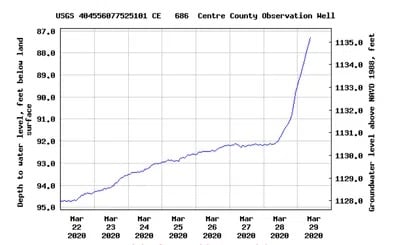
Well Height from the Kato Park Well Helps to Monitor Ground Water Height
Another side effect of hydrostatic pressure is the slow absorption of moisture into the porous blocks of your basement walls. Block walls can act like a sponge, sucking up water from the soil around them and eventually saturating the block itself. This saturation causes water damage and decay in the blocks that can eventually be seen on the inside of the basement itself. Although some polymer based coatings on the outside of the wall can prevent your block walls from absorbing water, the best way to stop this process is to make sure your foundation is equipped with proper footer drains and other measures, such as an external French drain, etc.
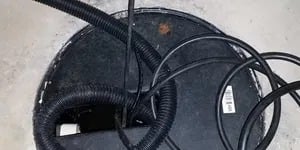
A unique feature of the Centre region is ground water coming up into your basement via your sump pump pit in your basement. Even folks living on hills out of flood zones can experience ground water flooding during times when we are in a rainy weather pattern for example the summer of 2018. During that summer, we had so much rain that ground water was constantly filling sump pump pits to the brink of flooding during each round of heavy rain.
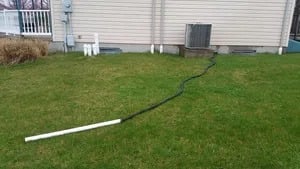
To mitigate the sump pump pit from overflowing, you need to have a sump pump that is at least 1/3 hp or higher, especially if you have experience this problem before. Extending a hose away from your house will help to take the water away from your home once it's pumped out of the pit. Most homes with sump pump pits have a hose attachment that is on the outside wall. If the hose that came with you home is not long enough, Lowes and Home Depot both have extended length hoses.